
The Fox Will Investigate Itself and Report Back on the Missing Chicken
The non-investigation, investigation

Let me explain how corporate misconduct investigations work, because it’s a system so perfectly absurd that it could only exist in a world where we’ve all collectively agreed to pretend obvious things aren’t obvious.
Here’s the setup: Let’s say your boss, Bob, has been doing something terrible. Maybe he’s been screaming at employees until they quit. Maybe he’s been sexually harassing junior staff. Maybe he’s been completely absent playing golf while running a whole department into the ground. Whatever it is, it’s bad, it’s documented, and you’ve finally worked up the courage to report it.
So you go to Human Resources (HR). Now, here’s where it gets good.
HR—the department that works for the company, gets paid by the company, and whose entire job security depends on keeping the company happy—will conduct an “impartial investigation” into whether Bob, who also works for the company and is probably golf buddies with someone in the C-suite, did anything wrong.

Expecting impartiality and fairness from a system like this is naive at best, and well, delusional at worst. It’s like asking a defense attorney to also be the prosecutor and the judge. It’s like having the fox investigate the missing chickens and file a report on whether the fox ate them. Spoiler alert: The fox is going to have some very interesting theories about a passing coyote.
But wait, it gets better. This is when the Oscar-worthy theatrics begin.
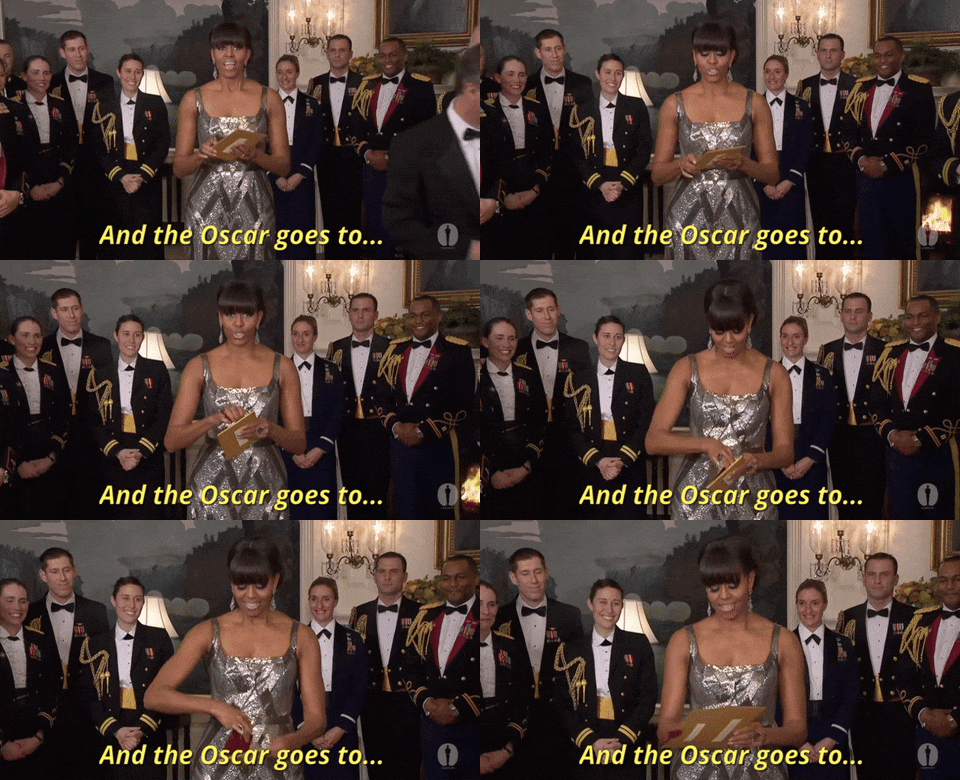
HR will sit you down in a conference room—you know the one, with the motivational poster about “teamwork” and the table that’s slightly too low for the chairs—and they’ll say things like “We take these allegations very seriously” and “We’re committed to a thorough and impartial investigation.” They’ll have a legal pad. They’ll nod with concern. They might even offer you water, which is how you know they’re really committed to justice.
Then they'll ask you to describe what happened, and they'll treat it like they're actually listening—nodding, taking notes, asking follow-up questions designed to sound thorough. But here's the thing: by the time you walk into that conference room, the outcome has already been decided. The investigation is just the paperwork that makes it look legitimate. Everything you say feeds into a legal file, not a fact-finding mission.
Because—and I cannot stress this enough—HR does not work for you. HR works for the company. Their job is not to protect employees from bad managers. Their job is to protect bad managers from employees. You are not their client. You are their problem.
The investigation will proceed with all the trappings of legitimacy. There will be interviews. There will be documentation. There will be phrases like “fact-finding process” and “due diligence.” Someone from Legal might even get involved, which is when things get interesting—lawyers need real facts to build a defense, but HR is usually busy editing the version that makes the company look best.
They might interview Bob. Bob will deny everything, or explain that you “misunderstood” his management style, or suggest that you’re “not a culture fit.” Bob will not be suspended during this investigation. Bob will continue coming to work, sitting in his office, attending meetings, and now he will know that you kicked off an investigation. Bob will likely even talk to your team members—in confidence of course—about the importance of “honesty” in the investigation (as long as honesty means you honestly better not say anything negative about Bob). You, meanwhile, will be wondering if you’ve just committed career suicide.
Here’s what happens next: After a thorough investigation lasting anywhere from two weeks to six months—during which you’ll hear absolutely nothing and begin to question your own sanity—HR will call you back into the conference room.
“We’ve completed our investigation,” they’ll say, “and while we can’t share the details due to confidentiality”—translation: we aren’t going to do anything and wouldn’t tell you anyway because we don’t want you to use it against us in court—”we want you to know we took your concerns seriously.” What will make this even more spectacular, is they will do this with a straight face.
Notice what’s missing from that sentence? Any indication that Bob did anything wrong. Any mention of consequences. Any suggestion that anything will change (other than your employment status).
That’s because the investigation found that while Bob’s management style might be “intense” or “direct,” there was no evidence of misconduct. Or maybe they found that “both parties could benefit from improved communication.” Or perhaps they’ve decided that Bob would benefit from “additional coaching,” which is corporate-speak for “we talked to him for five minutes and he promised to be more careful.”
Bob keeps his job. You get to keep working for Bob, but now Bob knows you reported him, and things are going to be super comfortable from here on out. HR has successfully protected the company from liability. The system works!
Except, of course, it doesn’t work. Not if the goal is actually finding truth or protecting employees or creating accountability. But that’s not the goal. That’s never been the goal.
The goal is to create a process that looks legitimate enough to satisfy legal requirements and make the company appear responsible, while ensuring that the company—and the people who run it—remain protected. It’s a magic trick. It’s theater. It’s a carefully constructed system designed to reach a predetermined conclusion while appearing to be open to evidence.
The absurdity is that we know that “impartial investigation” is an oxymoron when the investigator works for the accused. We know that the system is designed to protect power, not challenge it.
But we’ll keep pretending because we have no other option. We’ll keep filing reports with HR as if they’re a neutral party. We keep participating in investigations as if they might actually result in accountability. We keep using phrases like “speak truth to power” while working in systems specifically designed to ensure that truth never gets anywhere near power.
The fox will investigate itself and report back on the missing chickens. And we’ll all sit around nodding seriously while reading the report that concludes the chickens probably just wandered off on their own.
The system works perfectly. Just not for you.